


AI-Assisted Fund Flow Verification and Diversion Analysis in Stock Audit Using Structured Prompting
Problem
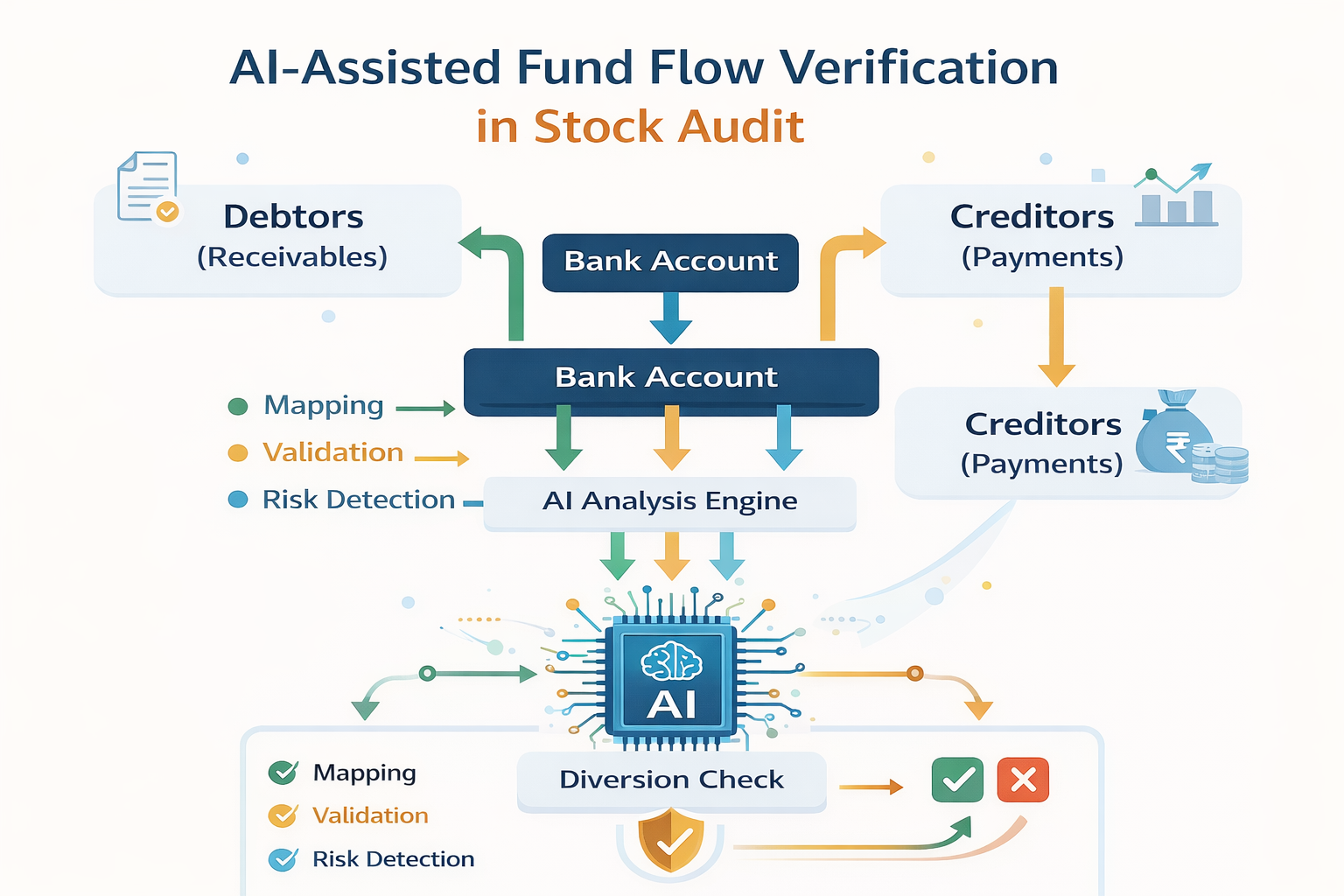
Prompts are given on interactive basis, evaluating the responses given at each stage. The final summary is as follows: "I am conducting a fund flow and diversion analysis for a borrower entity as part of a stock audit. Data provided: Bank statement of main operating account Loan account statements Debtors ledger (receivables) Creditors ledger (payables) Tasks: Map bank credits to debtors based on party name, transaction pattern, and amount. Map bank debits/payments to creditors. Identify transactions involving parties not appearing in the debtor/creditor ledgers. Analyse whether loan repayments are supported by genuine business inflows. Check for indicators of: • diversion of funds • round-tripping • evergreening Highlight any anomalies or exceptions. Output required: Summary of mapping (credits vs debtors, debits vs creditors) Exception report (non-matching parties, unusual transactions) Professional audit conclusion suitable for reporting "
Prompt Input
Bank statement of main operating account (A/c No. ****0000011) Loan account statements (multiple term loan accounts) Debtors ledger (sheet: “Debtors List”) Creditors ledger (sheet: “Creditors”) Sample characteristics: High-value RTGS/NEFT transactions Multiple large corporate debtors (e.g., GM Electra, CG Power, Goldmedal) Multiple trade creditors (e.g., Usha Conductors, Vaishnavi Engineering)
Prompt Output
The AI-assisted analysis provided: 1. Mapping Results Bank credits matched with trade receivables (debtors) Bank payments matched with trade creditors 2. Exception Testing No credits from unrelated/non-debtor parties No payments to non-creditor or personal/related parties No cash/self withdrawals observed 3. Loan Servicing Analysis EMIs serviced through business inflows No evidence of evergreening 4. Final Conclusion Funds were utilised for legitimate business purposes. No diversion, round-tripping, or abnormal routing of funds was observed.