India’s AI Ecosystem Evolves: From Adoption to Creation
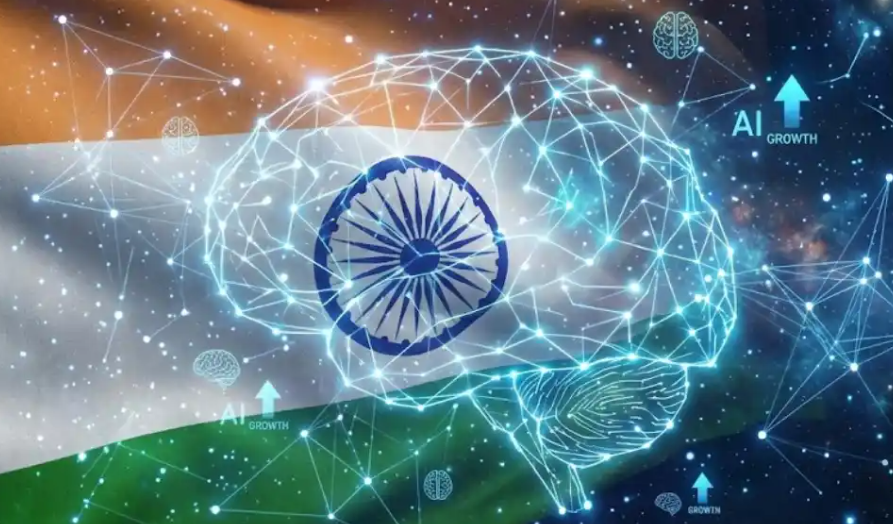
India’s artificial intelligence ecosystem has undergone remarkable transformation in recent years. What began as scattered research projects and isolated experiments now features sovereign, population-scale AI models designed, trained and governed domestically — a strategic shift fueled by the Ministry of Electronics and Information Technology’s IndiaAI Mission.
The IndiaAI Mission, backed by an initial ₹10,000 crore commitment, is accelerating foundational AI research, compute infrastructure and applications that reflect India’s diversity of languages, cultures and socioeconomic contexts. At its core is the ambition to build indigenous LLMs that can rival global AI systems while minimizing dependency on international data and architectures.
Breakthroughs at the India AI Impact Summit 2026
The India AI Impact Summit 2026, held in New Delhi, marked a watershed moment as several sovereign AI models were unveiled to public and industry audiences. These advancements signal that India’s role in generative AI is shifting sharply — from technology adopter to technology innovator on the global stage.
Sarvam AI: Homegrown Large Language Models
Bengaluru-based Sarvam AI showcased two groundbreaking models — a 30 billion and a 105 billion-parameter LLM — trained entirely on Indian datasets and optimized for multilingual reasoning, coding tasks and conversational applications. Early benchmarks reveal that these models compete with international offerings, while mixture-of-experts (MoE) architectures improve inference efficiency.
Sarvam’s suite also includes speech and vision components — such as Bulbul TTS (text-to-speech across Indian tongues) and document-understanding systems — forming an integrated AI stack designed for voice-first accessibility and real-world deployment.
BharatGen Param2: Government-Linked Multilingual Core Model
The BharatGen Param2, developed by an IIT Bombay consortium under government support, represents a significant public-sector milestone. With 17 billion parameters and advanced MoE design, it is built to understand all 22 scheduled Indian languages and contextual nuances like legal and governance frameworks — a first in truly sovereign AI for India.
Gnani.ai and Beyond: Multimodal Voice Intelligence
Gnani.ai’s Inya VoiceOS model expands voice-first AI, handling multilingual speech with natural prosody and near real-time responsiveness. Its architecture is tuned for conversational agents in banking, public helplines and customer support scenarios — demonstrating that India’s AI innovations extend beyond text to human-centric interaction models.
Why Sovereign LLMs Matter for India
Localized Language Intelligence: India’s linguistic landscape encompasses over 22 official languages and countless dialects — far beyond the English-centric focus of most global AI benchmarks. Indigenous LLMs ensure broader representation, reduced bias and improved inclusivity across demographic groups.
Cultural and Regulatory Relevance: Sovereign AI is inherently better equipped to understand local laws, social norms and public sentiment. This reduces misinterpretations that often occur when global models face context-specific tasks, particularly in sectors like governance, healthcare and education.
Ethical AI and Bias Mitigation: With models trained on Indian data, developers can chart more transparent pathways for fairness, accountability and ethical outputs — an important concern globally as AI adoption accelerates.
Challenges and the Road Ahead
Despite strong momentum, India’s AI journey faces structural hurdles such as bridging the gap between research readiness and enterprise deployment, securing investment parity with international counterparts and expanding compute infrastructure across the nation. Strategists stress that AI success will depend on community-wide collaboration — from academia to industry — to scale use cases with measurable impact.
In parallel, evaluation frameworks such as the Indic LLM-Arena are emerging to benchmark model performance across Indian languages and cultural contexts, ensuring accountability and standardization in AI growth.
Conclusion: India’s AI Chapter on the Global Stage
India’s sovereign LLM initiatives are setting the foundation for a new era in generative AI — one that prioritizes linguistic diversity, ethical frameworks and pragmatic utility for millions of users. The breakthroughs at the India AI Impact Summit 2026 exemplify how strategic public-private collaboration can chart a constructive AI future.
Source:economictimesGPT.