1. The Rise of Nano Banana 2 in the AI Image Revolution
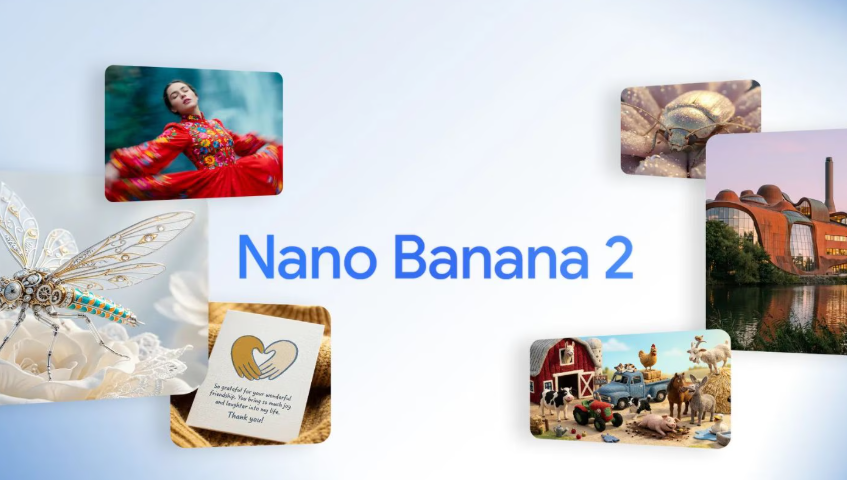
On February 26–27, 2026, the next iteration of a leading AI image generator — Nano Banana 2 — was publicly launched, marking a milestone in the evolution of generative AI technology. Dubbed officially as Gemini 3.1 Flash Image, this model expands on the capabilities of its predecessors by combining ultra-fast processing with enhanced world knowledge and visual reasoning. Senior tech leaders characterized Nano Banana 2 as one of the most advanced AI image models to date.
This release follows the first version of Nano Banana in August 2025, which quickly became a viral sensation due to its ability to turn text prompts into highly realistic visuals. Later, Nano Banana Pro introduced additional control and quality enhancements — and now Nano Banana 2 delivers greatly reduced latency, heightened accuracy, and broader accessibility.
2. What Nano Banana 2 Brings to AI Image Generation
The new model brings a suite of powerful AI and visual capabilities that set new standards in AI-driven creative workflows:
Speed and Performance
- Nano Banana 2 delivers faster image generation than its predecessors and many other current models. This enables near-instantaneous content creation, enabling real-time ideation, iteration, and edits.
Real-Time World Context
- Leveraging integrated AI knowledge sources such as live web data and contextual search results, the platform can generate visuals rooted in accurate representations of real objects, locations, and conditions—a key evolution over models limited to training data alone.
High-Fidelity Visuals
- The model supports 4K resolution outputs and reliable scene complexity, maintaining details for up to five distinct characters and 14 unique objects within a single image.
Accurate and Readable Text Production
- One long-standing challenge in AI imagery — text clarity within generated visuals — is significantly improved. Nano Banana 2 enhances text legibility, enabling content creators to produce infographics, banners, and visual communications with clear written elements.
Flexible Creative Control
- Users can specify visual features such as aspect ratio, object prominence, and scene composition via natural language instructions, making generation and iterative refinement more intuitive.
3. Multi-Platform Availability and Use Cases
Nano Banana 2 isn’t confined to a single application — it is being rolled out across a broad array of products used by both casual and enterprise users:
- AI-Driven Search Interfaces
- Standalone AI Apps and Studio Tools
- Visual Workflow Platforms
- Web and Mobile Ecosystems
The model is now accessible in over 140 countries and multiple languages, supporting visual creation and editing across mainstream platforms that include search, lens tools, API integrations, and video services. This broad deployment expands the utility of AI imagery beyond hobbyists to professional creators, marketers, educators, and designers worldwide.
4. Industry Context: What This Means for AI Innovation
The launch of Nano Banana 2 reflects significant progress in the generative AI landscape, addressing ongoing challenges in speed, consistency, accuracy, and accessibility:
- Elevated Creative Productivity: Users across industries — from digital art to technical communications — can now rapidly prototype visuals that previously required specialized design skills.
- Better Visual Reasoning: The model’s ability to interpret prompts with world-aware reasoning bridges the gap between generative imagination and factual accuracy.
- Cross-Platform Flexibility: Integration across multiple services reduces barriers for both individual users and enterprise workflows, aligning with current trends in scalable AI adoption.
Experts note that such developments underscore a broader shift in focus toward accessible yet powerful AI tools that seamlessly fit into everyday digital environments and professional content pipelines.
5. Looking Ahead: The Future of AI-Powered Visual Generation
With rapid iteration cycles like Nano Banana 2 and beyond, AI-powered image generation is poised to reshape visual creation workflows, making complex graphic compositions more accessible to all segments of users. Emerging features that incorporate contextual internet knowledge, real-time updates, and fine-grained subjective control are likely to define the next frontier of generative AI tools.
Source:indianexpressGPT.