The Rise of AI-Driven Productivity Platforms
Artificial Intelligence has moved beyond experimental tools and is now becoming a central feature in modern productivity ecosystems. Digital collaboration platforms are integrating advanced AI models capable of text generation, data analysis, summarization, and workflow automation, making everyday tasks faster and more efficient.
Recent developments show that AI assistants can now work alongside users inside document editors, spreadsheets, presentation tools, and file management systems. These assistants can interpret prompts, understand contextual information from files and communication threads, and generate useful outputs within seconds.
The shift signals a major transformation in how professionals interact with technology. Instead of manually creating documents or analyzing data step-by-step, users can now rely on AI to perform complex tasks while they focus on strategic decision-making.
2. From Blank Page to First Draft in Seconds
One of the most impactful advancements in AI productivity tools is the ability to generate complete document drafts instantly.
AI assistants can now analyze prompts and context from emails, files, and other data sources to create well-structured documents automatically. This capability addresses one of the most common challenges professionals face—the “blank page problem.”
Users can simply describe what they want to create, and the AI system produces an initial draft that can be edited, refined, and personalized. Such features are particularly useful for business reports, research summaries, meeting notes, and professional communications, allowing teams to work more efficiently.
In addition, advanced AI writing tools can adjust tone, summarize lengthy documents, and even rewrite text for clarity or style.
3. Intelligent Data Analysis in Spreadsheets
AI is also transforming spreadsheet tools by introducing advanced data analysis and automation capabilities.
New AI features can automatically generate tables, suggest formulas, and analyze datasets without requiring extensive spreadsheet expertise. This makes complex data analysis more accessible to professionals across different industries.
For example, users can describe the analysis they want—such as identifying trends, creating charts, or generating financial summaries—and the AI assistant will produce the necessary formulas and visualizations.
These capabilities are expected to play a significant role in fields like financial analytics, business intelligence, accounting automation, and strategic planning, where large datasets must be interpreted quickly.
4. Smarter Presentations and Visual Storytelling
AI-powered presentation tools are also evolving to make storytelling and visual communication easier.
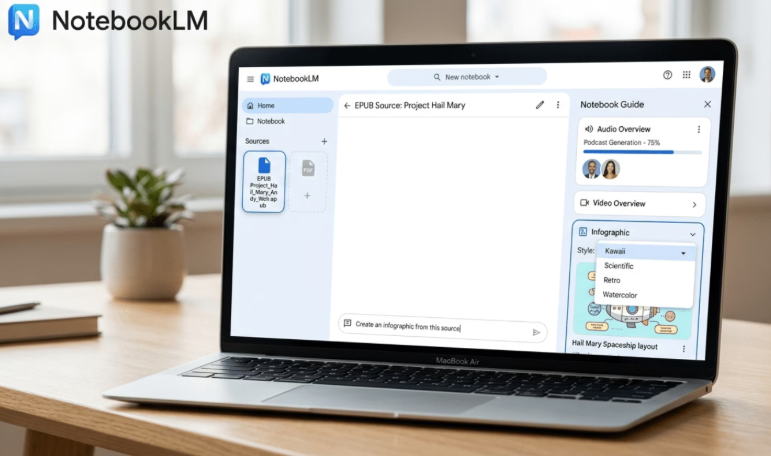
New features enable the automatic creation of presentation outlines, visual diagrams, and thematic slide designs based on a user’s prompt or document content. This allows professionals to transform written material into structured presentations without manually formatting slides.
AI can also help maintain consistent themes, layouts, and visual structures, improving the quality and professionalism of presentations.
Such innovations are especially valuable for business leaders, consultants, educators, and analysts who regularly prepare presentations for meetings, conferences, and training sessions.
5. AI-Powered File Organization and Knowledge Discovery
Managing large volumes of digital files is another area where AI is making a major impact.
Modern AI assistants can now scan files, summarize their contents, and surface relevant information across multiple documents. Instead of searching manually through folders, users can ask natural language questions and receive contextual answers.
For example, AI tools can generate quick summaries of reports stored in cloud drives or extract key insights from documents, making knowledge discovery significantly faster.
This capability is particularly useful for organizations dealing with extensive documentation such as legal records, financial reports, research papers, and corporate archives.
6. Integration of AI Across Workflows
Another important trend is the seamless integration of AI across different productivity applications.
Rather than operating as standalone tools, modern AI systems function as context-aware assistants embedded directly within the workspace environment. They can access relevant files, emails, and project data to generate meaningful outputs.
This integrated approach allows AI to assist with multi-step tasks such as:
- Drafting documents from meeting notes
- Creating presentations from reports
- Generating data insights from spreadsheets
- Summarizing conversations and files for decision-making
Such integration is transforming digital workspaces into AI-powered collaborative ecosystems rather than simple software applications.
7. Security, Privacy, and Responsible AI Use
As AI becomes more embedded in workplace systems, concerns around data privacy, security, and responsible AI deployment are also being addressed.
Modern AI productivity platforms incorporate enterprise-grade security measures to ensure that user data remains protected. Content generated or analyzed by AI is typically restricted within organizational environments and is not used to train models without permission.
Organizations are also implementing governance frameworks to monitor AI usage, ensuring compliance with corporate policies and regulatory standards.
8. The Future of AI-Assisted Work
The rapid expansion of AI capabilities in digital workspaces highlights a broader technological transformation. Experts believe the next phase will involve agentic AI systems capable of performing multi-step tasks autonomously and collaborating more naturally with human users.
Future developments may include:
- Autonomous workflow automation
- AI agents capable of conducting research and compiling reports
- Real-time collaboration between humans and AI assistants
- Advanced multimodal AI capable of handling text, images, video, and code simultaneously
These innovations will likely reshape professional workflows across industries including finance, consulting, technology, education, healthcare, and enterprise operations.
Conclusion
Artificial Intelligence is rapidly evolving from a support tool into a core component of modern productivity platforms. By enabling automated document creation, intelligent data analysis, smarter presentations, and advanced knowledge discovery, AI assistants are transforming how professionals work every day.
Source:ICAIGPT.