The Rise of AI Agent Marketplaces in the Creator Economy
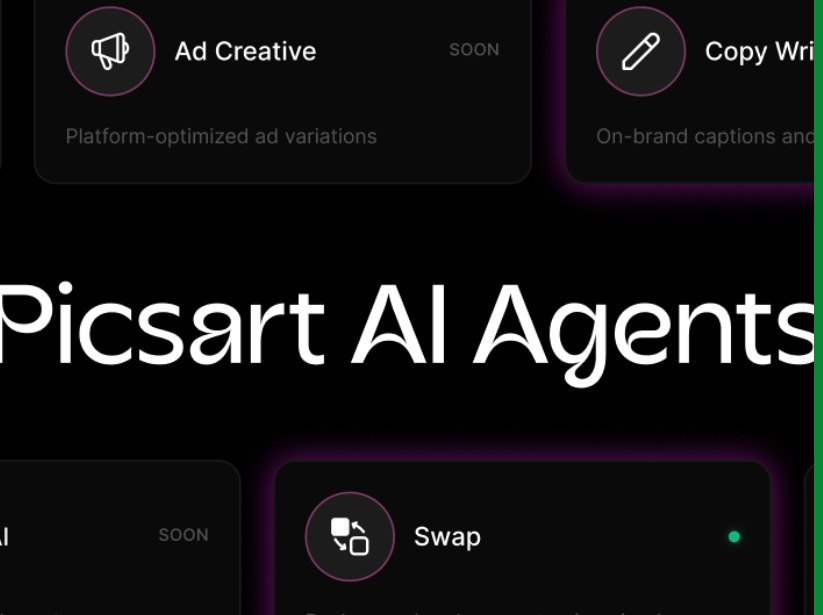
A new wave of innovation is transforming how creators interact with artificial intelligence. Instead of relying on standalone tools, emerging platforms are introducing AI agent marketplaces—ecosystems where users can deploy, customize, and even “hire” AI assistants tailored to specific creative or business needs.
These AI agents function as task-oriented digital collaborators, capable of handling end-to-end workflows such as video production, content generation, branding, and marketing automation. This marks a significant leap from traditional generative AI tools toward fully autonomous, goal-driven AI systems.
The concept aligns with the growing field of agentic AI, where systems can plan, execute, and optimize tasks with minimal human intervention, improving efficiency and reducing operational complexity.
From Tools to Intelligent Assistants
Historically, creators have relied on multiple AI tools for different tasks—image generation, video editing, copywriting, and audio production. This fragmented approach often resulted in workflow inefficiencies and increased costs.
Recent innovations are addressing this challenge by integrating multiple AI capabilities into unified ecosystems. For instance, new platforms now combine 90+ AI models from various providers into a single interface, allowing creators to generate multimedia content seamlessly without switching tools.
Additionally, intelligent copilots embedded within these ecosystems can automate complex tasks such as:
- Managing visual continuity across scenes
- Generating synchronized audio and storytelling elements
- Selecting optimal AI models dynamically
- Eliminating technical bottlenecks in creative workflows
This evolution is enabling creators to focus more on creative direction and storytelling, rather than technical execution.
Eliminating the ‘Prompt Engineering’ Barrier
One of the major barriers to adopting AI tools has been the need for prompt engineering expertise. Crafting effective prompts often requires technical knowledge, limiting accessibility for non-expert users.
The introduction of AI assistants addresses this issue by:
- Translating user intent into optimized prompts
- Automating technical configurations
- Providing proactive suggestions and corrections
As a result, creators can achieve high-quality outputs with minimal effort, significantly lowering the entry barrier for AI adoption. Reports suggest that such tools can improve productivity by up to three times, highlighting their potential impact on digital workflows.
AI Agents as Digital Workforce
The emergence of AI agent marketplaces signals a shift toward a digital workforce model, where AI assistants act as collaborators rather than mere tools.
Key characteristics of these AI agents include:
- Autonomy: Ability to execute multi-step tasks independently
- Context Awareness: Understanding project requirements and maintaining consistency
- Scalability: Handling large volumes of content production
- Adaptability: Learning from user preferences and improving over time
This trend mirrors developments in enterprise AI, where intelligent agents are increasingly used for workflow automation, decision-making, and operational efficiency.
Implications for Businesses and Creators
The integration of AI agent marketplaces into creative platforms has far-reaching implications:
1. Democratization of Content Creation
Advanced tools that were once accessible only to professionals are now available to a broader audience, enabling individuals and small businesses to produce high-quality digital content.
2. Cost and Time Efficiency
By consolidating multiple tools into a single platform and automating workflows, creators can significantly reduce both time-to-market and operational costs.
3. Growth of the Creator Economy
With over 130 million monthly users on leading creative platforms, the demand for scalable AI solutions is accelerating, driving innovation in the digital content and influencer economy.
4. Emergence of New Business Models
AI agent marketplaces could lead to:
- Subscription-based AI assistants
- On-demand AI services
- Custom AI agent development ecosystems
The Future of Agentic AI and Creative Workflows
The introduction of AI agent marketplaces is just the beginning. As AI systems become more sophisticated, the future may include:
- Fully autonomous content production pipelines
- Personalized AI teams for creators and enterprises
- Integration of AI agents across industries such as finance, education, and marketing
Experts suggest that this transition represents a shift from tool-based AI to collaborative AI ecosystems, fundamentally redefining how work is performed in the digital age.
Conclusion
The rise of AI agent marketplaces marks a pivotal moment in the evolution of artificial intelligence and the creator economy. By combining automation, intelligence, and accessibility, these platforms are transforming AI from a passive tool into an active collaborator.
As adoption accelerates, businesses and creators alike must adapt to this new paradigm—where AI-driven productivity, creative autonomy, and scalable innovation become the defining features of the next generation of digital work.
Source:techcrunchGPT.