The Rise of AI in UI/UX Design
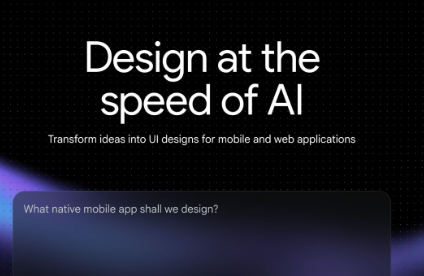
Artificial Intelligence is rapidly transforming the UI/UX design landscape, introducing tools that can translate human intent into digital interfaces within seconds. Traditionally, designing an application required multiple stages—wireframing, prototyping, visual design, and coding. Today, AI is collapsing these steps into a single streamlined workflow.
Modern AI design systems allow users to input natural language prompts or visual references, which are then processed to generate responsive layouts and usable front-end code. This marks a significant shift toward AI-driven product development, where ideation and execution are closely integrated.
From Prompt to Prototype: A Paradigm Shift
One of the most notable advancements is the ability of AI tools to transform simple descriptions—such as “a mobile shopping app interface” or “a financial dashboard”—into fully structured UI layouts. These systems not only create visual designs but also generate corresponding code, enabling faster development cycles.
Additionally, these tools can:
- Generate multiple design variations for comparison
- Accept sketches or screenshots as input
- Export designs into development workflows for further refinement
This approach significantly reduces dependency on traditional manual processes, enabling teams to move from concept to prototype in minutes rather than days.
The Concept of “Vibe Design” and Conversational Creativity
A notable emerging concept in this space is “vibe design”—a method where users describe not just functionality but also the emotion, intent, or user experience they want to achieve. AI systems then interpret these abstract inputs to generate design outputs aligned with the desired “vibe.”
Recent updates in such tools have introduced advanced capabilities like:
- Voice-based design commands for hands-free interaction
- Infinite canvas environments for unrestricted creativity
- Context-aware design agents that track project evolution
These features demonstrate a shift toward interactive and conversational design ecosystems, where users collaborate with AI in real time.
Impact on the Design Industry and Tools Ecosystem
The rise of AI in design is beginning to influence the broader software and design tools market. Analysts observe that such innovations could challenge traditional design platforms by automating many core functions, including layout generation and prototyping.
However, industry experts emphasise that AI is unlikely to replace designers entirely. Instead, it is expected to:
- Enhance productivity by handling repetitive tasks
- Allow designers to focus on strategy, creativity, and user experience
- Democratise design by making it accessible to non-experts
Thus, the role of designers is evolving from execution to creative direction and decision-making.
Benefits Driving Adoption of AI Design Tools
The growing adoption of AI-powered design tools is driven by several key advantages:
1. Speed and Efficiency
AI dramatically reduces the time required for prototyping and iteration, enabling rapid experimentation.
2. Accessibility and Democratization
Non-designers can now create functional interfaces, lowering entry barriers in app development.
3. Enhanced Creativity
By generating multiple variations and suggestions, AI expands creative possibilities.
4. Integration with Development Workflows
Direct code generation bridges the gap between design and development, improving collaboration.
Challenges and Limitations
Despite its potential, AI-driven design is not without challenges:
- Generated designs may lack brand consistency and refinement
- Complex user flows still require human oversight
- Ethical concerns around automation and job displacement persist
Experts stress that human intervention remains essential for ensuring usability, accessibility, and emotional resonance in design.
The Future of AI in Digital Product Development
The integration of AI into design workflows signals a broader transformation in the software development lifecycle. As tools become more sophisticated, the boundaries between ideation, design, and coding are likely to blur further.
Looking ahead, key trends include:
- End-to-end AI-driven product creation
- Increased use of multimodal inputs (text, voice, images)
- Greater emphasis on human-AI collaboration
Ultimately, AI is poised to become a foundational layer in digital creation, reshaping how applications are built and experienced.
Conclusion
The emergence of AI-powered design tools represents a pivotal moment in the evolution of technology. By enabling faster, smarter, and more intuitive design processes, these tools are redefining how digital products are created.
Source:indianexpressGPT.