AI Enters the Age of Intelligent Digital Co-workers
Artificial Intelligence is rapidly moving beyond answering questions and generating text. The latest generation of AI systems is designed to function as intelligent digital collaborators capable of managing complete workflows rather than assisting with isolated tasks.
This evolution introduces what many technology experts describe as the Agentic AI Era—a phase where AI systems are capable of understanding goals, planning execution strategies, coordinating multiple tools, and delivering finished outcomes with significantly reduced human supervision.
Rather than simply responding to individual prompts, these AI systems can maintain context across lengthy assignments, retrieve information from connected resources, perform research, generate reports, prepare presentations, develop software, and support complex decision-making processes.
This shift signals a broader transformation in workplace productivity as organizations increasingly integrate AI into everyday business operations.
From AI Chatbots to Autonomous AI Agents
The biggest technological advancement is not merely the release of more powerful language models but the transition from AI assistants to AI agents.
Traditional conversational AI typically waits for individual user instructions before performing one task at a time.
Modern AI agents, however, can:
- Plan multi-step projects
- Execute sequential workflows
- Collect information from multiple sources
- Generate complete business documents
- Build presentations and spreadsheets
- Assist with coding and software development
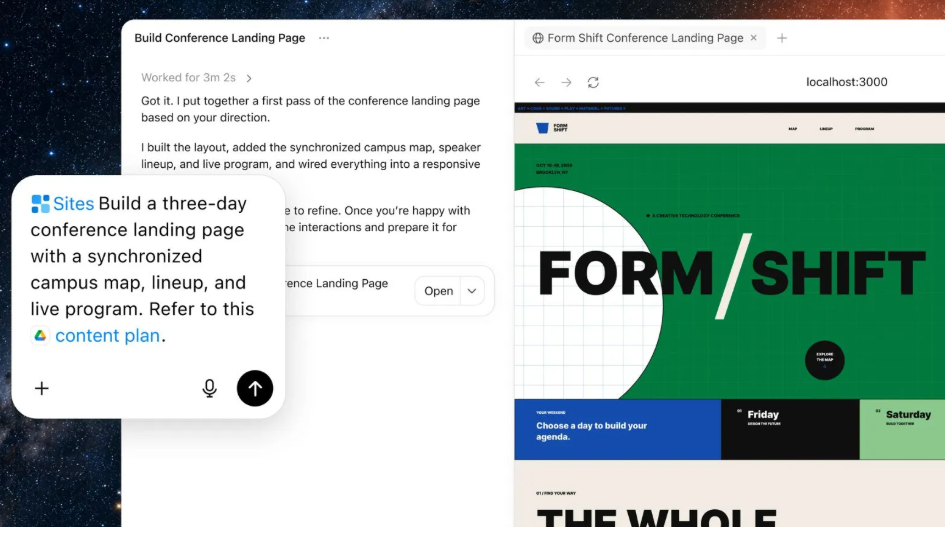
- Create websites and applications
- Continue long-running tasks while maintaining context
This ability to independently coordinate multiple activities represents a major advancement in AI-assisted knowledge work.
Foundation Models Continue to Advance
Recent developments also demonstrate rapid improvements in large language models across several dimensions, including:
- Advanced logical reasoning
- Faster response generation
- Improved coding capabilities
- Better scientific and mathematical performance
- Enhanced multimodal understanding
- Stronger safety mechanisms
- Greater cost efficiency for enterprise deployment
To support different workloads, model families are increasingly being introduced with multiple variants optimized for high-performance reasoning, balanced enterprise use, and cost-efficient large-scale deployment. This allows organizations to choose AI systems that best align with their operational requirements.
Enterprise Productivity Becomes the Primary Focus
One of the strongest trends emerging across the AI industry is the movement toward enterprise productivity.
Instead of positioning AI solely as a conversational interface, technology providers are increasingly focusing on complete workplace solutions capable of assisting professionals throughout their daily workflows.
Potential enterprise applications include:
- Research and market analysis
- Financial reporting
- Regulatory compliance support
- Software development
- Document drafting
- Presentation creation
- Spreadsheet generation
- Knowledge management
- Workflow automation
- Cross-functional collaboration
This evolution reflects growing demand from businesses seeking measurable productivity improvements rather than isolated AI-generated outputs.
Connected Workflows Define the Next Generation of AI
A defining characteristic of next-generation AI systems is their ability to interact with multiple workplace applications through secure integrations.
Instead of requiring users to manually switch between numerous software platforms, AI agents can retrieve relevant information, synthesize data, and coordinate tasks across connected environments while maintaining a unified workflow.
This significantly reduces repetitive manual effort and allows professionals to concentrate on higher-value analytical and strategic activities.
AI Agents Are Redefining Professional Work
Across industries, AI agents are beginning to reshape how professionals approach knowledge-intensive work.
Potential use cases include:
Finance and Accounting
- Financial analysis
- Report preparation
- Compliance documentation
- Risk assessment support
Legal and Regulatory
- Document review
- Policy research
- Contract analysis
- Regulatory summarization
Technology
- Code generation
- Software testing
- Debugging
- Documentation
Business Operations
- Workflow automation
- Project management
- Internal reporting
- Meeting preparation
Research
- Information gathering
- Literature reviews
- Competitive intelligence
- Trend analysis
While human oversight remains essential, AI agents are increasingly serving as productivity multipliers across knowledge-based professions.
The Rise of Agentic AI
Industry analysts increasingly identify Agentic AI as one of the most important technology trends of 2026.
Unlike conventional AI applications that primarily generate outputs upon request, Agentic AI systems are designed to:
- Understand objectives
- Create execution plans
- Adapt to changing information
- Coordinate multiple software tools
- Complete end-to-end assignments
- Learn from contextual interactions
This represents a significant milestone in the evolution of artificial intelligence from passive assistants to active digital collaborators.
Challenges Remain
Despite rapid progress, experts caution that widespread deployment of autonomous AI agents must be accompanied by robust governance frameworks.
Key considerations include:
- Data privacy
- Information security
- Human oversight
- AI governance
- Explainability
- Responsible AI practices
- Compliance with organizational policies
- Prevention of unintended actions
Recent research also highlights that AI agents require rigorous validation, realistic benchmarking, and policy safeguards before being entrusted with high-impact workflows.
What This Means for Professionals
The emergence of AI agents is expected to redefine the future of work.
Professionals who understand how to effectively collaborate with AI systems are likely to gain significant productivity advantages, allowing them to devote more time to strategic decision-making, creativity, innovation, and client engagement.
Rather than replacing human expertise, AI is increasingly being viewed as an augmentation technology that enhances efficiency, accelerates execution, and improves access to information.
As organizations continue investing in Generative AI, Agentic AI, Enterprise AI, Workflow Automation, Digital Transformation, and AI Productivity Tools, these technologies are poised to become integral components of modern workplaces across industries.
Source:indianexpressGPT.