Introduction: A Critical Security Discovery in the AI Era
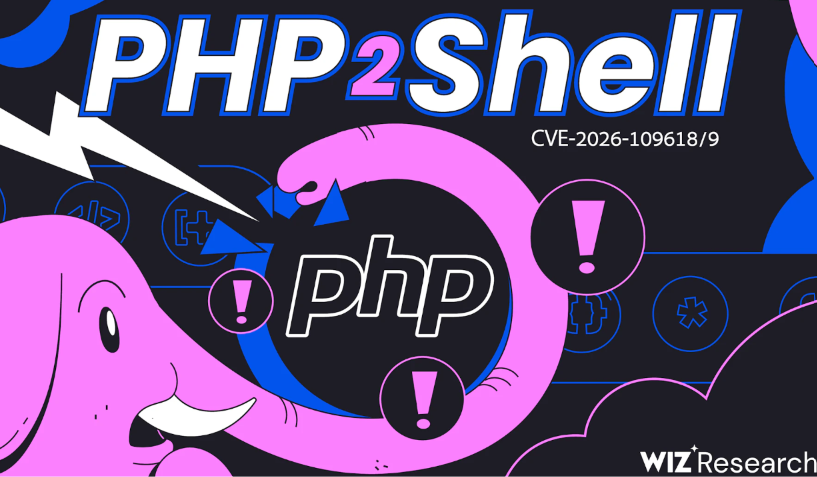
The cybersecurity landscape is entering a new phase in which Artificial Intelligence is transforming how software vulnerabilities are discovered, analyzed, and addressed. A recent development highlighting this shift is PHP2Shell, a family of critical vulnerabilities in the core PHP engine that has brought renewed attention to the security of the internet's underlying software infrastructure.
Publicly disclosed on October 21, 2026, PHP2Shell demonstrates how weaknesses embedded in widely deployed software can remain difficult to exploit for years before advances in research techniques and AI-assisted analysis make them more practical to investigate.
The findings involve two critical vulnerabilities that can expose affected PHP deployments to remote code execution (RCE) and sensitive memory disclosure. Because PHP supports a vast ecosystem of websites, content management systems, and enterprise applications, weaknesses in its core runtime can have consequences far beyond a single product or organization.
What makes this development particularly noteworthy is the role of frontier AI models in helping researchers investigate complex memory-management flaws and construct working exploit demonstrations. The discovery illustrates an emerging cybersecurity reality: AI is not merely assisting software development; it is increasingly influencing how security vulnerabilities are identified, understood, and remediated.
Understanding PHP2Shell: What Makes the Vulnerabilities Significant?
PHP is a server-side programming language used to build dynamic websites, process web requests, interact with databases, and support a broad range of online services. Its extensive adoption means that vulnerabilities in the PHP runtime can potentially affect thousands of applications and hosting environments.
According to the published research, PHP2Shell comprises two related vulnerabilities in PHP's core implementation. The problems involve memory-safety issues and the handling of application state when requests encounter fatal errors, particularly out-of-memory conditions.
The vulnerabilities are tracked under the following identifiers:
- CVE-2026-109618: A vulnerability involving out-of-memory error handling and memory corruption that can enable remote code execution.
- CVE-2026-109619: A vulnerability involving stale global state and memory-safety failures that can also enable remote code execution.
Both vulnerabilities have been assigned a CVSS v4.0 severity score of 9.2, placing them in the critical-risk category.
Their significance lies in the fact that the vulnerable code resides within PHP itself. Consequently, an application does not necessarily need to contain a separate programming mistake to be exposed. A website running an affected PHP runtime may remain vulnerable even if its own application code has been written securely.
This distinction is important for organizations that rely on third-party frameworks, open-source applications, and managed hosting infrastructure. Application-level security reviews alone may not identify vulnerabilities originating in the underlying runtime.
How PHP2Shell Works: A Closer Look at the Technical Risks
The PHP2Shell research identified multiple exploitable memory-safety flaws associated with PHP's internal request-processing and memory-management behavior.
In simplified terms, PHP processes incoming requests using internal data structures and memory allocations. When certain fatal errors interrupt that process, some internal state may not be cleaned up correctly. References to memory that has already been released can remain available to later operations.
This condition can create a use-after-free vulnerability, a class of software defect in which a program continues to access memory after it has been freed. Depending on the surrounding conditions, such defects can result in application instability, information disclosure, memory corruption, or arbitrary code execution.
The research also identified an issue involving OPcache, PHP's bytecode caching mechanism. Under certain failure conditions, inconsistent internal state can result in type confusion and corruption of shared runtime data.
These weaknesses demonstrate how subtle implementation errors can create serious security consequences when they occur in software that processes untrusted internet traffic.
The reported impact includes two major categories:
1. Remote Code Execution (RCE)
An attacker may be able to execute code on a vulnerable server without first authenticating to the application. The consequences depend on the privileges of the affected PHP process and the server's configuration, but could include unauthorized access, website modification, data theft, or further compromise of connected systems.
2. Sensitive Memory Disclosure
A separate exploitation path may expose data contained in PHP worker memory. Depending on the information present in that memory, this could include passwords, authentication tokens, API keys, certificates, or information associated with other requests.
Memory disclosure can be particularly concerning because it may expose secrets without requiring the attacker to achieve full remote code execution first.
These technical findings reinforce the importance of secure memory management, reliable error handling, and rigorous testing of widely deployed software components.
Potential Impact on WordPress, Drupal, Joomla, and Other PHP Applications
The PHP2Shell research demonstrated remote code execution against WordPress, Drupal, and Joomla using representative deployment environments.
These platforms are widely used for websites, publishing systems, institutional portals, and other digital services. However, the underlying issue is not limited to these applications.
Because the vulnerability exists in the PHP runtime, other applications using affected PHP versions may also be exposed. The precise risk depends on the installed PHP release, execution environment, configuration, and availability of vendor-provided fixes.
The potential consequences for affected organizations include:
- Unauthorized execution of code on web servers.
- Exposure of sensitive information stored in process memory.
- Website defacement or unauthorized modification of online content.
- Possible theft of credentials and authentication secrets.
- Potential movement from a compromised web server into connected systems, depending on network access and permissions.
- Service disruption, investigation costs, and reputational damage.
Organizations using PHP-based websites should therefore assess the security of the runtime itself rather than focusing exclusively on application plugins, themes, or custom code.
The disclosure is also a reminder that open-source software security is a shared responsibility. A single weakness in a foundational component can affect a diverse ecosystem of applications, hosting providers, developers, and end users.
Artificial Intelligence Emerges as a Major Force in Vulnerability Research
One of the most important aspects of PHP2Shell is the role of advanced AI models in the vulnerability research process.
According to the published research, AI-assisted analysis contributed to identifying weaknesses, developing exploit demonstrations, investigating attack behavior, and validating the effectiveness of fixes.
The challenge was not simply recognizing a coding mistake. Researchers had to understand complex interactions between memory allocation, fatal error handling, request cleanup, and the reuse of internal state across requests.
Turning those observations into a reliable proof of concept required extensive technical analysis, testing, and debugging. AI-assisted tools helped reduce the effort involved in working through these complex relationships.
Large language models can support security researchers by helping them:
- Analyze large and complicated codebases.
- Identify potentially unsafe memory-handling patterns.
- Explain unfamiliar code paths and interactions between components.
- Develop hypotheses about how a vulnerability might be triggered.
- Interpret test results and investigate unexpected behavior.
- Compare vulnerable code with proposed fixes.
- Validate whether remediation addresses the underlying defect.
These capabilities can make sophisticated vulnerability research more accessible and efficient. Tasks that once required extensive manual investigation may become faster when researchers can use AI to explore code, test hypotheses, and analyze results.
However, AI-assisted security research still requires expert oversight. Models can produce incorrect explanations, overlook environmental constraints, or suggest approaches that do not work in practice. Reliable findings depend on controlled testing, independent verification, and careful technical judgment.
PHP2Shell therefore illustrates an important distinction: AI can accelerate security research, but trustworthy conclusions still depend on evidence and validation.
The Dual-Use Challenge: AI Can Strengthen Defense and Accelerate Attacks
The growing use of AI in cybersecurity introduces a significant dual-use challenge.
On the defensive side, AI can help organizations identify software weaknesses earlier, analyze vulnerabilities more quickly, prioritize remediation, and improve the quality of security testing. It can also support security teams working with large volumes of source code, system logs, vulnerability reports, and threat intelligence.
On the offensive side, similar capabilities may help malicious actors understand complex software, adapt existing exploit techniques, and reduce the specialist knowledge required to investigate vulnerable systems.
PHP2Shell demonstrates why this balance matters. The difficulty of exploiting a vulnerability has historically depended partly on the time, expertise, and experimentation required to turn a theoretical weakness into a reliable attack. AI-assisted workflows can reduce some of these barriers.
This does not mean that every vulnerability can now be exploited automatically, or that AI removes all technical obstacles. Exploitation still depends on the specific software version, runtime configuration, environmental conditions, and available privileges.
Nevertheless, organizations should recognize that the practical risk associated with a vulnerability can change as exploitation techniques improve.
The emerging lesson is clear: cybersecurity strategies must account not only for the existence of vulnerabilities but also for how quickly new tools can make them exploitable.
Why the Discovery Matters for Enterprise Cybersecurity
For enterprises, PHP2Shell is a reminder that cybersecurity risks extend across the entire technology stack.
Organizations often invest in firewalls, endpoint protection, access controls, application security testing, and monitoring systems. These measures remain essential, but they cannot replace timely remediation of vulnerabilities in foundational software.
A vulnerable runtime can undermine the security of otherwise well-maintained applications. Consequently, organizations need visibility into the software components running across their environments, including those managed by external hosting providers or embedded within third-party applications.
The incident highlights several priorities for modern enterprise cybersecurity.
Software inventory and asset visibility
Organizations need an accurate inventory of PHP installations, including production servers, development environments, containers, cloud workloads, and legacy systems. Unknown or unmanaged assets can delay remediation.
Vulnerability prioritization
Security teams should evaluate vulnerabilities based on severity, internet exposure, exploitability, business criticality, and the sensitivity of the systems involved. Critical vulnerabilities in internet-facing infrastructure require urgent attention.
Patch management and lifecycle planning
Security updates should be applied promptly, with testing and deployment procedures designed to minimize unnecessary delays. Unsupported software requires particular attention because regular security updates may no longer be available.
Continuous monitoring
Web server logs, PHP error logs, process activity, and network telemetry can help investigators identify suspicious activity. Monitoring should complement patching rather than serve as a substitute for it.
Incident response readiness
Organizations should have procedures for investigating potential compromise, preserving evidence, rotating exposed credentials, and recovering affected systems.
Together, these measures support a more resilient approach to vulnerability management in an AI-enabled threat environment.
Immediate Security Response: What Organizations Should Do
Following the disclosure, the PHP project released security updates on October 21, 2026, for supported release branches.
The reported fixed versions are:
| PHP branchFixed release |
| PHP 8.5 | 8.5.12 |
| PHP 8.4 | 8.4.27 |
| PHP 8.3 | 8.3.36 |
| PHP 8.2 | 8.2.35 |
Administrators should verify these versions and remediation requirements against the official PHP security advisories and the guidance provided by their operating-system or hosting vendor. Organizations running older, unsupported PHP branches should not assume that a standard upgrade path or security fix is available for their installation.
Recommended actions include:
- Identify affected systems: Inventory PHP installations and determine which versions are running across servers, containers, and managed environments.
- Install the appropriate security updates: Upgrade to a fixed release supported by the relevant vendor and verify that the update has been applied successfully.
- Prioritize internet-facing services: Assess public websites, APIs, and other externally accessible applications first.
- Review suspicious activity: Investigate unusual server errors, unexpected PHP worker behavior, suspicious requests, and evidence of unauthorized code execution.
- Protect potentially exposed secrets: If a system may have been compromised, assess whether credentials, tokens, API keys, or certificates need to be rotated.
- Strengthen access controls: Apply least-privilege permissions, restrict unnecessary network access, and isolate critical workloads where practical.
- Plan legacy-system upgrades: Develop a migration strategy for unsupported software and systems that cannot be patched immediately.
Temporary defensive controls may reduce exposure while remediation is underway, but they should not be treated as a complete solution. Applying the appropriate security updates remains the primary remediation measure.
The Role of Responsible Disclosure and Collaborative Security Research
Addressing vulnerabilities in foundational software requires coordination among researchers, maintainers, infrastructure providers, and affected organizations.
The PHP2Shell disclosure involved research into PHP's core implementation, communication with the PHP security team, and work to validate corrective changes. The wider security ecosystem also prepared guidance and defensive measures to help organizations assess and reduce their exposure.
Responsible disclosure gives software maintainers an opportunity to investigate a reported issue, develop a fix, and coordinate security guidance before detailed technical information becomes widely available.
However, large software ecosystems make this process challenging. A single runtime vulnerability can affect different operating systems, hosting providers, deployment models, and application stacks. Some organizations can update immediately, while others depend on vendor testing, scheduled maintenance, or legacy-system constraints.
This makes clear communication and timely remediation especially important.
AI may help accelerate the discovery and analysis of security defects, but its benefits are greatest when combined with responsible reporting, effective patch development, and coordinated deployment across the software ecosystem.
What PHP2Shell Signals About the Future of AI-Powered Cybersecurity
PHP2Shell represents a broader shift in how security professionals may approach vulnerability discovery and remediation.
For many years, identifying a subtle software defect and demonstrating that it could be exploited required significant specialist expertise and repeated manual experimentation. AI-assisted analysis is beginning to change the economics of this work by helping researchers examine code, reason about complex behavior, and investigate technical problems more efficiently.
This development creates an opportunity to improve software security at scale. AI-assisted code review, automated testing, vulnerability triage, and patch validation could help uncover weaknesses that conventional testing has missed.
At the same time, organizations must prepare for the possibility that attackers will use comparable capabilities to investigate widely deployed software and adapt exploitation techniques more quickly.
Several trends are likely to become increasingly important:
- AI-powered vulnerability discovery: More intensive analysis of open-source software and enterprise codebases.
- Automated security testing: Greater use of AI-assisted tools to generate test cases and investigate unexpected behavior.
- Faster vulnerability remediation: Improved support for understanding patches and validating whether fixes address root causes.
- AI-driven threat detection: Broader use of machine learning and language models to interpret suspicious activity and correlate security signals.
- Continuous software assurance: Greater emphasis on monitoring and testing software throughout its lifecycle rather than relying solely on pre-release reviews.
- Secure AI development practices: Stronger controls over AI-generated code, tool permissions, and automated actions that can affect production systems.
The central challenge will be ensuring that defensive capabilities advance at least as quickly as offensive capabilities.
Organizations that integrate AI into cybersecurity responsibly, maintain accurate asset inventories, and prioritize timely patching will be better positioned to respond to this evolving threat landscape.
Conclusion: A Wake-Up Call for Software Security in the AI Era
PHP2Shell is more than a technical disclosure involving two critical vulnerabilities. It is an example of how longstanding weaknesses in foundational software can become urgent security risks when advanced research techniques make them easier to investigate and exploit.
The findings highlight the importance of protecting the infrastructure beneath applications, maintaining supported software versions, and treating vulnerability remediation as an ongoing operational priority.
They also demonstrate the transformative potential of AI in cybersecurity. Artificial intelligence can help researchers discover weaknesses that have remained hidden for years, but the same technological progress may reduce the effort required to develop sophisticated attacks.
For organizations, the response must combine immediate action with long-term preparation: apply the relevant PHP security updates, investigate signs of potential compromise, protect sensitive credentials, and strengthen software security practices across the technology stack.
As AI continues to reshape vulnerability research, the future of cybersecurity will depend on how effectively organizations translate faster discovery into faster protection.
PHP2Shell reinforces a critical message for the digital economy: in an era of AI-accelerated cybersecurity, identifying vulnerabilities is only the beginning. The real priority is ensuring that systems are secured before weaknesses become successful attacks.
SEO Keywords
PHP2Shell vulnerability, PHP remote code execution, CVE-2026-109618, CVE-2026-109619, AI in cybersecurity, artificial intelligence security, critical PHP vulnerabilities, PHP security update 2026, remote code execution vulnerability, memory-safety vulnerabilities, WordPress security, Drupal security, Joomla security, AI-powered vulnerability discovery, cybersecurity news 2026, enterprise cybersecurity, software vulnerability management, zero-day vulnerability risks, web application security, open-source software security, AI-driven cyber threats, PHP patch management, cybersecurity threat intelligence, and secure software development.
Source:blog