AI-Powered Cybersecurity Discovery Sparks Worldwide Concern
Artificial Intelligence is increasingly transforming cybersecurity research, and the latest PHP2Shell disclosure demonstrates the scale of its potential impact.
On October 21, 2026, the disclosure of two critical vulnerabilities in PHP prompted security warnings and urgent remediation efforts across multiple sectors. The flaws affect the underlying PHP runtime, which supports a large proportion of websites and web applications worldwide.
The discovery has become particularly significant because researchers used advanced AI-assisted techniques to investigate complex software weaknesses that had remained hidden for years. The findings illustrate how AI can help security researchers move beyond identifying suspicious code patterns to understanding whether complicated software defects can be turned into practical attacks.
The subsequent response has extended beyond individual website administrators. Public institutions, businesses, hosting providers, and cybersecurity agencies have been working to assess exposure, deploy security fixes, and reduce the possibility of exploitation.
The incident has also prompted a broader debate about AI safety, software security, and the speed at which emerging technologies are changing the balance between cyber defense and cybercrime.
What Is PHP2Shell? Understanding the Critical Vulnerabilities
PHP is a server-side programming language used to process web requests, interact with databases, and generate dynamic website content. It supports a broad ecosystem that includes content management systems, e-commerce platforms, enterprise applications, and online publishing services.
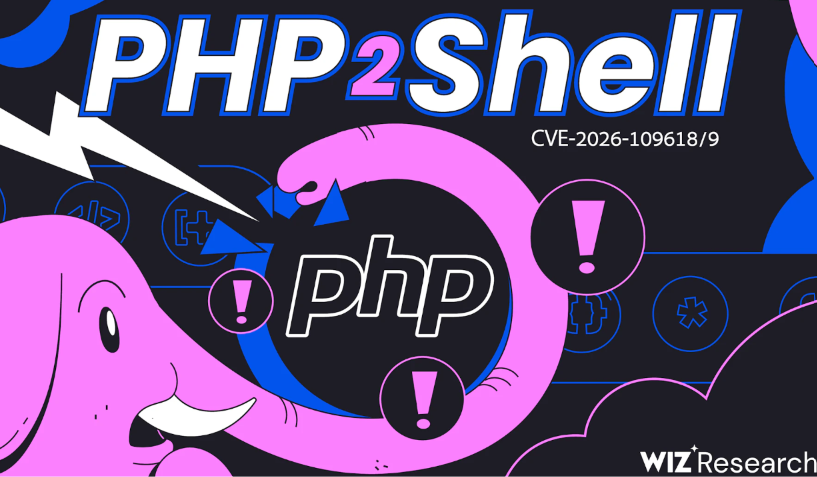
PHP2Shell refers to two critical vulnerabilities in the PHP runtime itself, tracked under the following identifiers:
- CVE-2026-109618
- CVE-2026-109619
Both vulnerabilities have been reported with a CVSS v4.0 severity score of 9.2, placing them in the critical category.
The technical issues involve unsafe memory handling during certain fatal-error conditions, including situations in which PHP encounters memory exhaustion. Under specific circumstances, internal data structures may retain references to memory that has already been released or may become inconsistent following an interrupted operation.
These conditions can lead to memory corruption, sensitive information disclosure, or remote code execution.
Remote code execution is particularly serious because it can allow an attacker to make a vulnerable server execute unauthorized instructions. Depending on the affected system's permissions and configuration, a successful attack could enable data theft, website modification, service disruption, or further compromise.
Unlike vulnerabilities limited to a specific website plugin, PHP2Shell affects the underlying runtime. This means that the security of an application can depend on the PHP version it uses, even if the application's own source code does not contain the original defect.
Why the PHP2Shell Discovery Has Such a Wide Potential Impact
PHP is deeply integrated into the internet's technology infrastructure. It powers numerous websites, web applications, publishing systems, and online services.
According to security research published by Wiz, PHP supports approximately 70% of websites worldwide. That estimate indicates the potential scale of exposure, although it should not be interpreted as meaning that every website is vulnerable or that every affected installation has been compromised.
The researchers demonstrated exploitation against representative deployments of WordPress, Drupal, and Joomla. These examples show that the vulnerabilities can affect applications built on top of PHP without requiring a separate flaw in each application's code.
The implications extend to other PHP-based systems, depending on the software version, deployment configuration, and availability of security updates.
Potential consequences include:
- Unauthorized execution of code on vulnerable servers.
- Exposure of passwords, authentication tokens, API keys, or other sensitive information in process memory.
- Unauthorized modification of website content or server files.
- Disruption of online services and business operations.
- Possible access to connected systems when network permissions and security controls allow it.
- Financial, operational, and reputational damage resulting from a confirmed compromise.
The discovery reinforces a fundamental principle of cybersecurity: protecting individual applications is not sufficient when vulnerabilities exist in the foundational software on which those applications depend.
How Artificial Intelligence Helped Researchers Identify Longstanding Weaknesses
One of the defining aspects of the PHP2Shell incident is the contribution of advanced AI tools to vulnerability research.
Traditional software security investigations can require extensive manual code analysis, debugging, experimentation, and testing. This is especially true for memory-safety vulnerabilities, where a defect may only become exploitable when several complex conditions occur together.
In the PHP2Shell investigation, researchers had to examine how PHP handled memory allocation, error recovery, internal data structures, and the reuse of memory across requests. Identifying the weaknesses was only part of the challenge; demonstrating their potential impact required additional analysis and validation.
AI-assisted research helped make this process more practical.
Advanced models can support cybersecurity specialists by analyzing large codebases, identifying potentially unsafe operations, explaining unfamiliar code paths, generating test hypotheses, and assisting with the investigation of unexpected program behavior.
They can also help researchers compare vulnerable code with corrected implementations and investigate whether proposed fixes address the underlying causes of a defect.
However, AI does not eliminate the need for technical expertise. Researchers must still test their hypotheses, verify results, and establish that a reported vulnerability is reproducible under the relevant conditions.
The significance of PHP2Shell lies in the combination of AI-assisted reasoning and conventional security research. Together, these capabilities helped expose weaknesses that had remained difficult to investigate and demonstrate.
A New Cybersecurity Challenge: AI Is Accelerating Both Discovery and Exploitation
The growing use of artificial intelligence in cybersecurity creates a complex challenge for organizations worldwide.
On the defensive side, AI can help identify vulnerabilities earlier, improve source-code analysis, accelerate security testing, and support faster remediation.
On the offensive side, similar capabilities can help attackers understand unfamiliar software, adapt existing techniques, and investigate potential targets with less manual effort.
The PHP2Shell incident has intensified concerns that the time required to turn a software vulnerability into a practical attack could continue to decrease.
Historically, a complex memory-safety defect might have required substantial specialist expertise and repeated experimentation before it could be exploited reliably. AI-assisted analysis can reduce some of that effort by helping researchers interpret failures, explore alternative explanations, and adapt their technical approaches.
This does not mean that every vulnerability can be exploited automatically. Successful exploitation still depends on technical conditions, software versions, system configurations, and defensive controls.
Nevertheless, organizations must recognize that a vulnerability's practical risk can change rapidly as new research and exploitation techniques emerge.
The broader lesson is that AI is changing the economics of cybersecurity. The time available to investigate, patch, and contain a vulnerability may become increasingly limited once technical details become public.
Global Response: Governments and Organizations Move to Secure Systems
The PHP2Shell disclosure prompted an international response as security teams assessed which systems might be exposed.
Cybersecurity authorities, including the UK's National Cyber Security Centre and other national and regional agencies, urged organizations to identify affected PHP installations and apply the available security fixes promptly.
Some organizations temporarily took websites or online services offline as a precaution while they assessed their exposure or prepared corrective measures. Such actions were intended to reduce risk and should not automatically be interpreted as evidence that those organizations had suffered a successful cyberattack.
The response highlights the operational difficulties associated with vulnerabilities affecting widely deployed infrastructure.
Large organizations may operate thousands of applications across different environments, while smaller businesses may depend on third-party hosting providers or lack dedicated security teams. Both groups need to establish which software versions they use, determine whether they are exposed, and ensure that corrective measures have been applied.
Reports of attempted exploitation have added urgency to these efforts. Security organizations have warned that attackers may move quickly when technical details of a critical vulnerability become available.
The incident demonstrates why coordinated disclosure, clear technical guidance, and rapid communication are essential components of modern cyber defense.
Reports of Exploitation Attempts Raise the Stakes
The PHP2Shell disclosure has also been accompanied by reports of attempts to exploit the vulnerabilities.
Amazon reported detecting activity targeting a decoy system, commonly known as a honeypot, before the public disclosure process was complete. The company also described subsequent attempts involving different payloads and anonymization methods.
A honeypot is a controlled environment designed to attract and observe suspicious activity. Attempts against such a system can provide valuable threat intelligence, but they do not, by themselves, establish that a production system was successfully compromised.
Separately, Cloudflare reported observing exploit-related traffic around the disclosure period, with activity increasing substantially after technical information became public.
These reports illustrate a familiar pattern in cybersecurity: once information about a critical vulnerability spreads, multiple actors may begin testing potential exploitation techniques.
The use of AI could intensify this pattern by helping attackers analyze technical disclosures, investigate possible exploitation paths, and modify approaches more quickly.
Organizations should therefore distinguish between evidence of attempted exploitation, confirmed successful attacks, and actual damage. Each requires a different investigative response, but all can provide important information for risk assessment and incident preparedness.
Emergency Security Measures: What Organizations Need to Do
The PHP2Shell incident reinforces the importance of immediate and well-coordinated vulnerability management.
Security updates were released for supported PHP branches on October 21, 2026. Administrators should confirm the appropriate fixed release through the official PHP security advisories and their operating-system or hosting vendor.
The reported fixed versions include:
| PHP branchReported fixed version |
| PHP 8.5 | 8.5.12 |
| PHP 8.4 | 8.4.27 |
| PHP 8.3 | 8.3.36 |
| PHP 8.2 | 8.2.35 |
Organizations should verify these version numbers and the applicable remediation instructions against current official guidance before deployment.
Recommended security measures include:
1. Identify vulnerable systems
Create an inventory of PHP installations across public websites, internal applications, virtual machines, containers, and cloud infrastructure. Include systems managed by external hosting providers.
2. Apply security patches immediately
Upgrade affected installations to an appropriate fixed release. Confirm that the running runtime has actually been updated rather than assuming that a maintenance task has completed.
3. Prioritize externally accessible services
Public-facing websites, APIs, and applications processing untrusted internet traffic should receive urgent attention.
4. Investigate potential compromise
Review server logs, application errors, process activity, and available network telemetry for suspicious behavior. If there are indications of successful exploitation, initiate the organization's incident response procedures.
5. Protect sensitive credentials
If compromise or memory exposure is suspected, assess whether passwords, API keys, session tokens, certificates, or other secrets need to be rotated.
6. Use temporary mitigation where necessary
If immediate patching is impossible, apply vendor-recommended protective measures. Where a system cannot be adequately mitigated, temporarily taking it offline may be necessary until it can be secured.
7. Strengthen long-term software maintenance
Organizations should establish clear ownership of software assets, maintain supported versions, test updates efficiently, and ensure that security patches are not delayed unnecessarily.
These steps can reduce the risk of exploitation while improving resilience against future vulnerabilities.
Why AI-Powered Cyber Defense Is Becoming Essential
The PHP2Shell incident illustrates why traditional cybersecurity approaches must continue to evolve.
Security teams face increasing volumes of vulnerability reports, software dependencies, system alerts, and potential threats. AI-assisted tools can help prioritize this information and support more efficient analysis.
When implemented responsibly, AI can contribute to several important areas of cyber defense:
- AI-powered code review: Identifying suspicious patterns and potential weaknesses in source code.
- Automated vulnerability analysis: Helping security teams understand the likely impact of newly disclosed flaws.
- Threat intelligence analysis: Correlating reports and technical indicators to support investigation.
- Security testing and validation: Assisting with test generation and evaluating whether fixes address identified defects.
- Incident response support: Helping analysts organize evidence, interpret logs, and identify areas requiring further investigation.
- Software supply chain security: Supporting the assessment of dependencies and components used across applications.
These capabilities can help organizations respond more quickly, but their effectiveness depends on the quality of the underlying data, appropriate access controls, and human verification.
AI systems may produce inaccurate conclusions or miss important contextual details. Security decisions involving production infrastructure should therefore be supported by reproducible evidence and established operational procedures.
The most effective approach combines AI-assisted analysis with experienced security professionals, reliable monitoring, and disciplined vulnerability management.
The Wider Implications for the Future of Artificial Intelligence
PHP2Shell represents a broader development in the relationship between AI and cybersecurity.
For years, security research has relied on specialists to identify weaknesses, reproduce defects, develop proof-of-concept demonstrations, and coordinate fixes. AI is increasingly capable of assisting with several of these tasks, potentially shortening the research cycle.
This creates an opportunity to improve software quality across the digital economy. Developers may be able to identify defects earlier, maintainers may gain better visibility into complex codebases, and security teams may be able to evaluate threats more quickly.
At the same time, AI-assisted research can increase pressure on organizations to patch vulnerabilities promptly. A flaw that was previously difficult to exploit may become more practical to investigate as tools improve.
The challenge is therefore not simply to adopt AI, but to ensure that its use strengthens security rather than creating new weaknesses.
Organizations should establish clear rules for AI-assisted security research, control access to sensitive code and infrastructure, validate AI-generated findings, and ensure that automated systems cannot make unapproved changes to production environments.
Governments, researchers, software maintainers, and businesses will also need to continue cooperating on responsible disclosure, secure development practices, and timely remediation.
Conclusion: PHP2Shell Highlights a Turning Point for AI and Cybersecurity
The PHP2Shell incident demonstrates how advances in artificial intelligence are changing the discovery and exploitation of software vulnerabilities.
Two critical weaknesses in a foundational internet technology prompted urgent security action because of their potential to enable remote code execution and sensitive data exposure. The fact that AI-assisted research helped uncover the flaws highlights the technology's growing importance in modern vulnerability analysis.
The international response also illustrates the operational challenges of securing widely deployed software. Identifying exposure, coordinating updates, investigating suspicious activity, and protecting sensitive information all require timely action.
For organizations, the immediate priority is to verify their PHP deployments, apply the relevant security updates, and investigate any signs of compromise. For the broader technology industry, the incident reinforces the need to build security into software development and maintenance processes from the beginning.
AI has the potential to make digital systems safer by accelerating research and helping defenders identify weaknesses before they are exploited. Realizing that potential will require responsible implementation, effective oversight, and a commitment to rapid remediation.
As artificial intelligence continues to reshape cybersecurity, PHP2Shell sends a clear message: the ability to discover vulnerabilities faster must be matched by the ability to protect systems faster.
Source:news.